In this guide, learn the 10 critical criteria for choosing industrial LED lighting, including lumen, lux, IP protection, energy efficiency, beam angle and driver quality.
Why Does Choosing Industrial LED Lighting Matter?
In industrial facilities, choosing the right lighting is not just about making the space bright. It also plays a critical role in energy efficiency, worker safety, production quality and maintenance costs. For this reason, when choosing industrial LED lighting, many technical and application-specific criteria must be evaluated together.
Below you will find, in detail, the 10 most important criteria to consider when choosing LED luminaires for factories, warehouses, workshops and logistics areas.
1. Luminous Output (Lumen) and Illuminance (Lux)
Lumen indicates how much light a luminaire emits, while lux indicates the amount of light falling on the floor. The required lux level varies for different areas such as warehouses, production lines or assembly areas. Insufficient lighting leads to workplace accidents, while excessive lighting causes unnecessary energy consumption.
2. Beam Angle and Optical Design
Uniform light distribution is very important in industrial areas. Wide-angle optics should be preferred for general areas, and narrow-angle optics for high-ceiling racking aisles and corridors. The right optic reduces glare and increases efficiency.
3. IP Protection Rating
The IP protection rating of luminaires to be used in dusty, humid or wash-down environments must always be checked. For example:
IP65: Dust-tight and protected against water jets
IP67: Protected against temporary immersion in water
In outdoor and heavy-industry applications, a high IP rating directly affects product life.
4. Energy Efficiency (Lm/W)
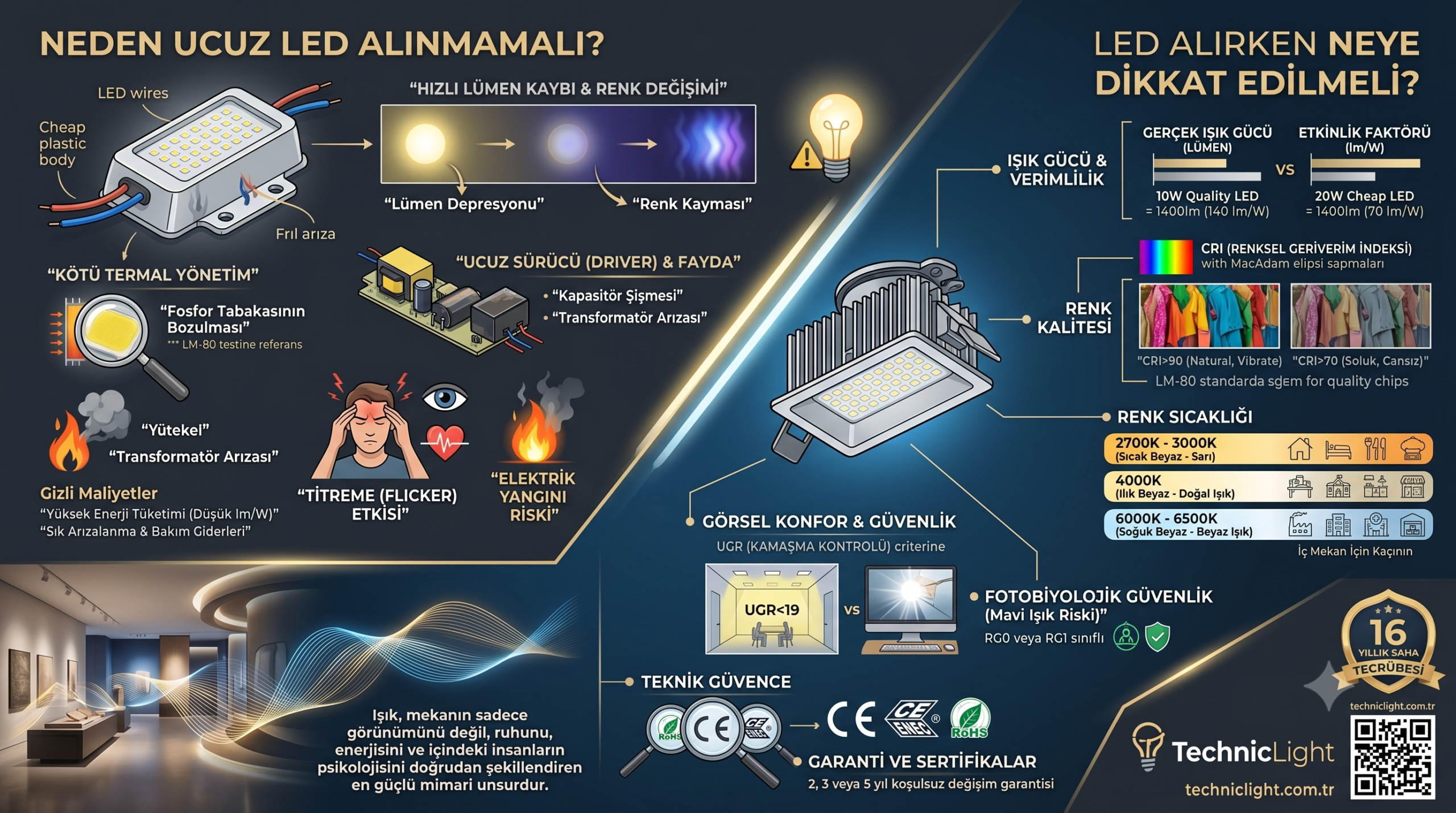
The amount of light a luminaire produces per watt indicates its energy performance. Products with a high lumen-per-watt rating deliver the same illuminance with lower energy consumption.
5. LED Driver Quality
The driver is the heart of an LED luminaire. Low-quality drivers can cause flicker, premature failure and loss of light output. Long-lasting, stable drivers significantly reduce maintenance costs.
6. Color Temperature and CRI
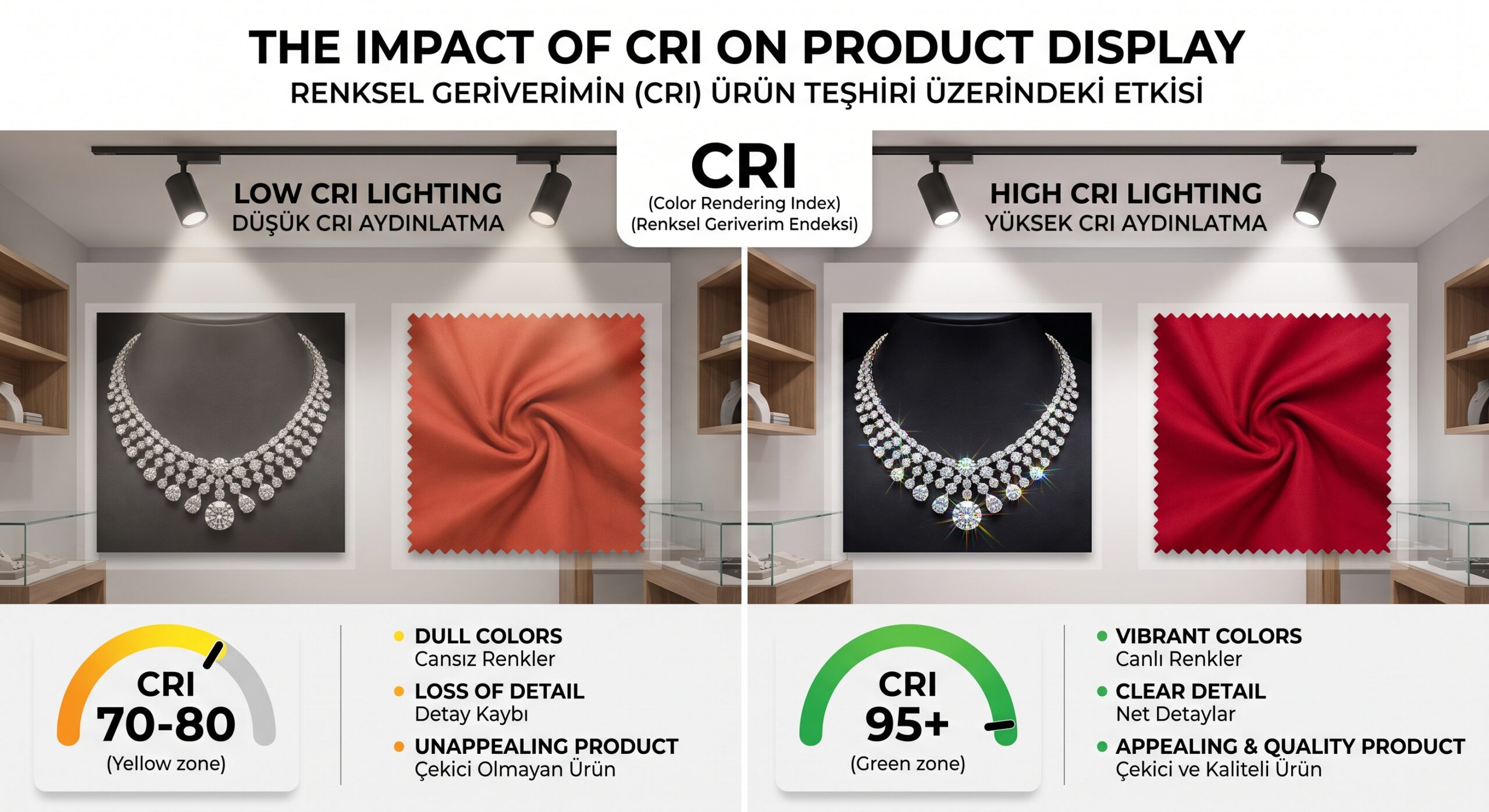
In industrial areas, natural white light between 4000K and 5000K is generally preferred. In addition, luminaires with a high CRI (Color Rendering Index) ensure colors are perceived accurately and offer an advantage in quality control processes.
7. Mounting Height and Luminaire Type
High Bay luminaires should be used for high-ceiling areas and Low Bay luminaires for areas with lower ceilings. Choosing the wrong product leads to light loss and uneven lighting.
8. Thermal Management (Cooling Design)
For LEDs to last long, heat must be dissipated properly. An aluminum housing and well-designed cooling fins prevent luminous flux from declining over time.
9. Certifications and Standards
Products with certifications such as CE, RoHS and ENEC show that they meet safety and quality standards. These documents are especially important in industrial facilities.
10. Warranty Period and Technical Support
A long warranty period and a strong technical service network safeguard your investment. Lighting is not a one-time purchase but a long-term investment.
Conclusion
Choosing the right industrial LED lighting directly affects energy savings, workplace safety and production efficiency.
Lumen output, optical design, IP protection, driver quality and certifications must be evaluated together.
To choose the luminaire that best suits your needs, we recommend professional lighting planning based on your application area.