In the modern retail world, store design is not limited to decoration or product placement. Professional retail store lighting solutions are among the most important factors shaping the customer experience, strengthening product perception, and directly affecting sales performance. Thanks to well-planned architectural lighting design, stores go beyond being mere sales areas and become spaces that deliver a powerful brand experience.
In this comprehensive guide, we will address the question of how to light a retail store in detail, examining topics such as showroom lighting techniques, window display lighting design, premium store lighting approaches, and boutique store solutions at a professional level.
Why Is Retail Store Lighting Such a Critical Element?
The moment a customer walks into a store, light forms the first impression. Well-planned store lighting design:
Makes products look higher quality and more premium
Adds depth and a sense of direction to the space
Can increase the time customers spend in the store
Can speed up the purchasing decision
Poor lighting planning, on the other hand, can cause product colors to look wrong, eye strain, and a disorderly perception of the space.
What Is Architectural Lighting Design?
Architectural lighting design is planning light not only for illumination but in a way that reveals the architectural features of the space. In this approach, light:
Divides areas into zones
Creates visual hierarchy
Creates an emotional atmosphere
Supports brand identity
In modern retail store and showroom projects, architectural lighting is an integral part of the design.
Professional Retail Store Lighting Layers
A successful retail store lighting plan generally consists of three main layers.
1. Ambient Lighting
Ambient lighting provides the store's basic light level. Linear LED luminaire systems are often preferred for homogeneous light distribution. These systems are compatible with modern architectural designs and create a sense of order in the space.
Advantages:
Balanced light distribution
Energy efficiency
Minimalist look
Have a long service life
2. Accent Lighting
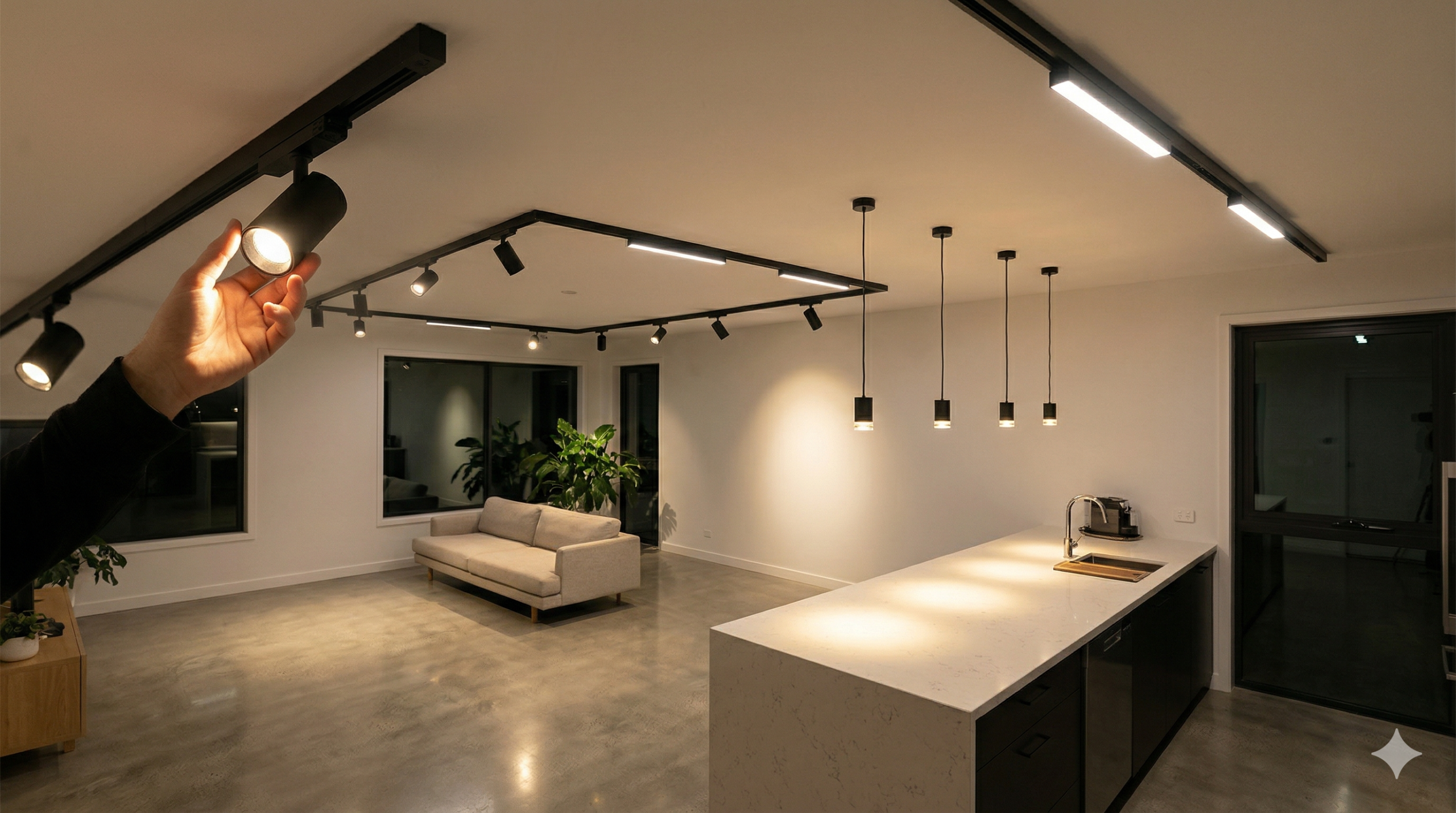
Accent lighting is one of the most powerful tools for sales performance. Track spotlight systems bring specific products to the fore and direct the customer's attention.
For proper accenting:
The beam angle must be chosen correctly
No shadows should form on the product surface
Contrast balance must be maintained
Thanks to their flexible structure, track spotlight systems can be easily readjusted when the product layout changes.
3. Decorative and Architectural Lighting
Decorative lighting details define the store's identity. Concealed linear LED lights, in-shelf LED applications, and architectural light lines add aesthetic value to the space.
What Should Showroom Lighting Be Like?
In showroom lighting projects, the goal is not merely to display products but to create an experience. For this reason, showroom lighting should be more dramatic and controlled.
Key points:
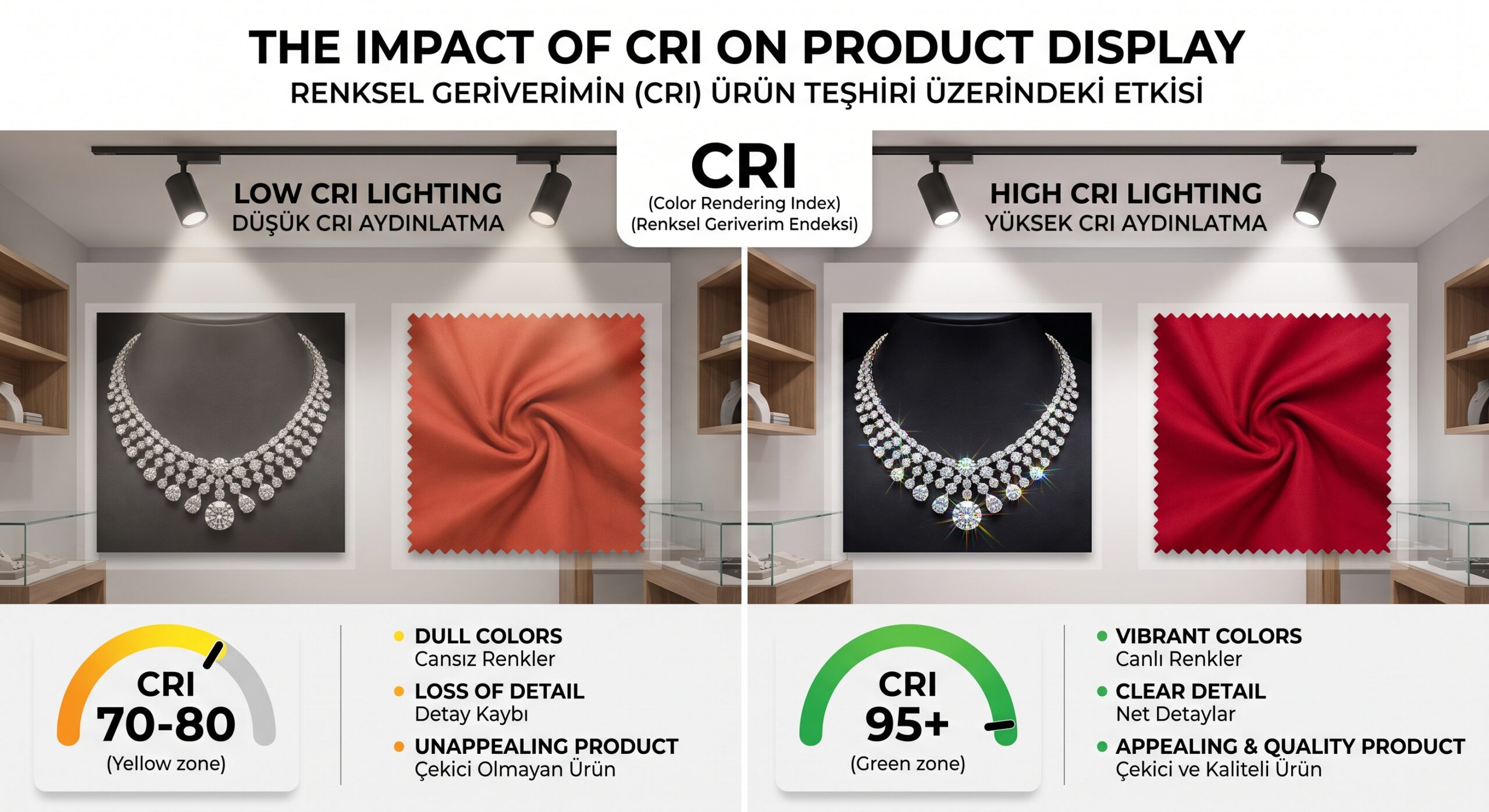
Use CRI 90+ light
Correct Kelvin selection (3000K–4000K)
Layered lighting planning
Narrow-beam track spotlight accents
For example, in automotive showrooms, narrow-beam lights that emphasize the product surface strengthen the premium perception.
Window Display Lighting Strategies
The window display is a store's most powerful marketing space facing the outside world. Well-planned window lighting can significantly increase the rate at which customers are drawn in.
For professional window display lighting:
High-contrast light
Dramatic accent spots
Creating a focal point
The lighting used in the window should be consistent with the in-store lighting concept.
Premium Retail Store Lighting Approach
In luxury store projects, light is a fundamental design element that reflects the brand's identity.
Premium lighting principles:
Soft shadows
Concealed linear LED details
Warm color tones
High CRI values
This approach makes products be perceived as more valuable.
Boutique Store Lighting Solutions
In small spaces, the right use of light can make the space look larger. In boutique store lighting design:
Warm light tones
Layered lighting
should be preferred.
Lux Calculation and Technical Planning
Professional retail store lighting solutions should be planned with lux calculations.
General recommendations:
General area: 300–500 lux
Product accent: 700–1000 lux
Window display area: higher lux values
Energy Efficiency and LED Technology
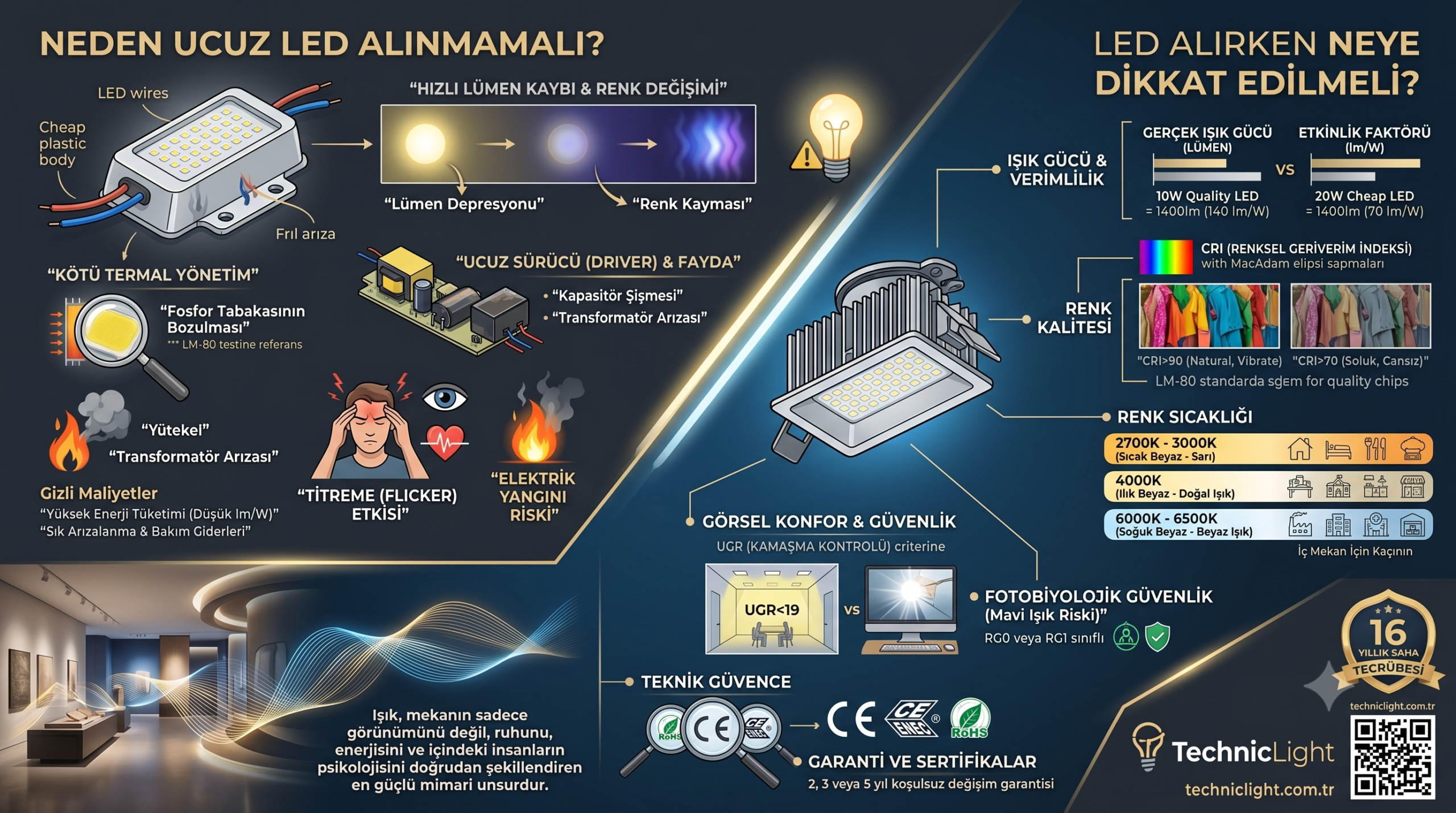
Modern LED luminaires offer high light quality while saving energy. A quality driver and the right optical design deliver long-term performance.
Common Retail Store Lighting Mistakes
Lighting the entire area with equal light
Using a low CRI
Wrong Kelvin selection
Insufficient accent lighting
Conclusion
Properly planned retail store lighting solutions and showroom lighting design completely transform the store atmosphere. Thanks to linear LED luminaire systems, track spotlight solutions, and a layered architectural lighting approach, stores become both aesthetic and sales-oriented. A professional lighting plan does not merely light the space; it strengthens the customer experience and increases the brand's perceived value.