Unlike standard retail lighting, showroom lighting design is not done merely to make products visible. Professional showroom lighting techniques are planned strategically to create a product experience, strengthen brand perception, and guide customers' movement through the space. Thanks to the right architectural lighting design, showroom areas go beyond being display spaces and become experience spaces.
In this comprehensive guide, we cover the showroom lighting planning process, track spotlight systems, the use of linear LED luminaires, the light layering approach, lux calculation principles, and the effects of lighting design on customer psychology in detail.
What Is Showroom Lighting and Why Does It Matter?
Showrooms are typically spaces where automotive, furniture, technology, or premium products are displayed. For this reason, the lighting design used must be more dramatic, more controlled, and more aesthetic than standard retail lighting.
Advantages of successful showroom lighting design:
Highlights product details
Creates a premium brand perception
Adds depth to the space
Guides customer flow
Strengthens the purchasing experience
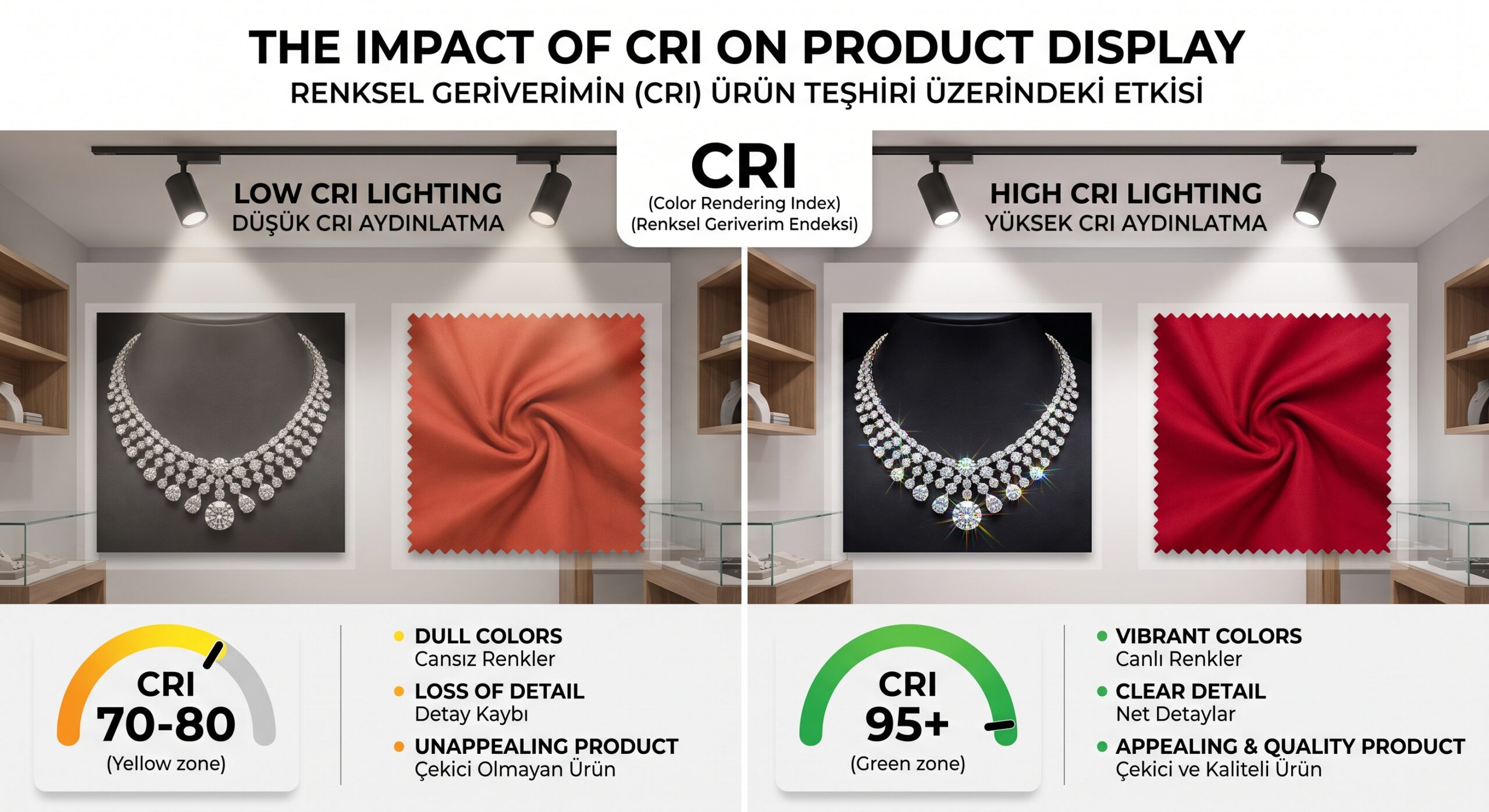
Poor lighting, on the other hand, can cause glare on product surfaces, color distortion, and eye strain.
A Layered Approach in Architectural Lighting Design
One of the most important principles in professional showroom projects is the layered lighting approach. This method divides light into three main layers used for different purposes.
Ambient Lighting
Ambient lighting sets the basic light level of the space. At this stage, linear LED luminaire systems are preferred because they provide homogeneous light distribution over large areas.
Advantages:
Provides visual comfort
Lights the space in a balanced way
Suits modern architectural design
The goal of ambient lighting is not to draw attention but to create a comfortable base light environment.
Accent Lighting
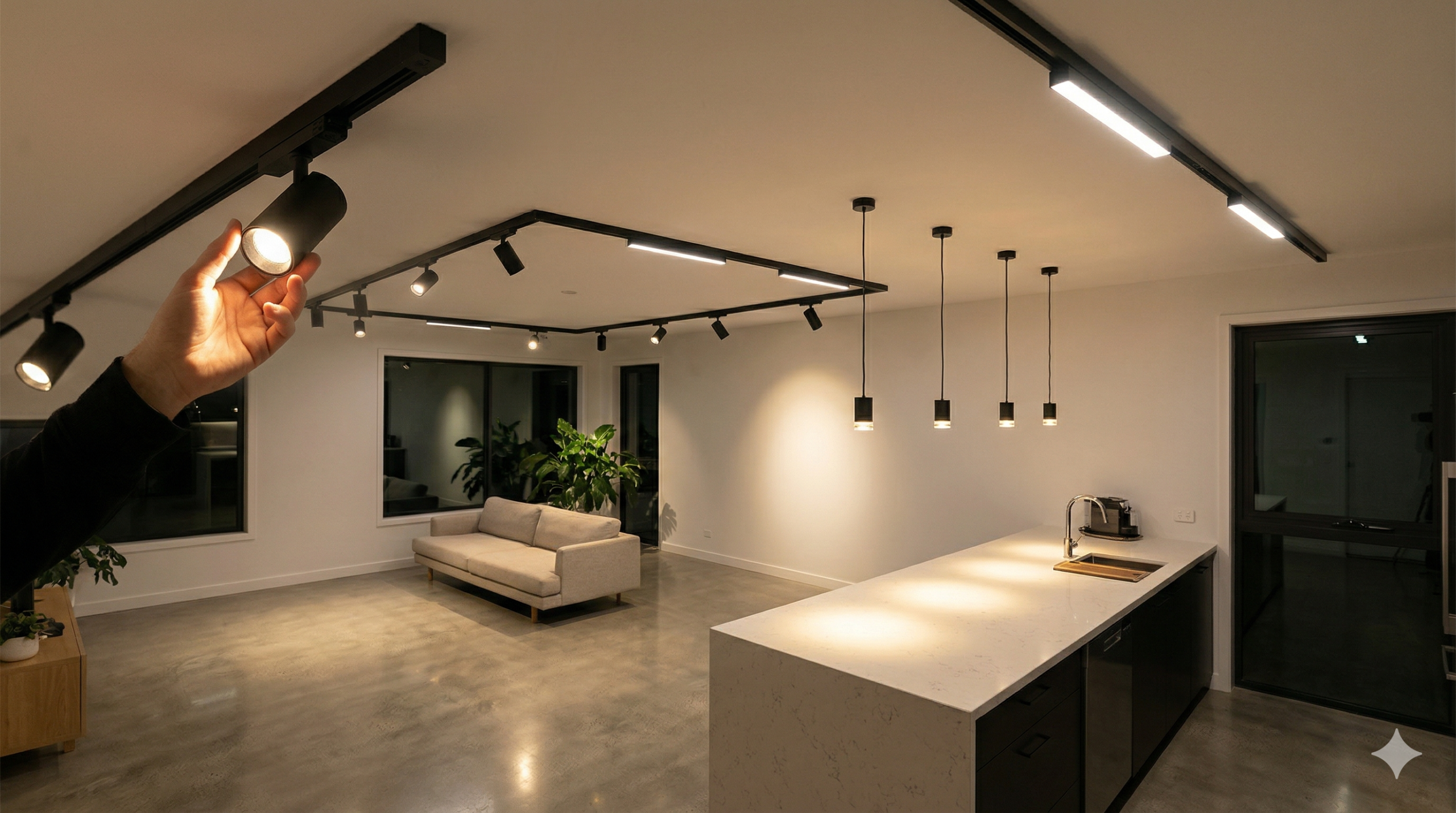
Accent lighting is the most critical layer of showroom design. With track spotlight systems, specific products can be dramatically brought to the fore.
For proper accenting:
The beam angle must be chosen correctly
No shadows should form on the product surface
Contrast balance must be maintained
Thanks to their flexible structure, track spotlight systems easily adapt to changes in product layout.
Decorative and Architectural Lighting
Architectural lighting details strengthen the showroom atmosphere. Concealed LED light lines, in-shelf lighting, and linear light strips give the space a modern look.
How to Choose the Beam Angle
The beam angle is a critical factor in showroom lighting.
15° narrow angle → special product emphasis
24° medium angle → product groups
36° wide angle → general accent
Choosing the wrong angle can create harsh shadows on the product.
CRI and Kelvin Selection
Color accuracy is very important in showroom lighting design.
CRI (Color Rendering Index):
CRI 90+ is recommended
Kelvin:
3000K → warm and inviting atmosphere
4000K → natural and balanced look
A wrong Kelvin choice can cause product colors to be perceived differently.
Strategies for Using Linear LED Luminaires
In modern showroom projects, linear LED luminaire solutions have become an integral part of architectural design.
Areas of use:
Guidance along the ceiling
Corridor lighting
Checkout areas
Linear lighting can guide the customer's movement by creating a sense of direction in the space.
Lux Calculation for Showrooms
Lux calculation plays a critical role in lighting planning.
General recommendations:
General area: 300–500 lux
Product accent: 800–1200 lux
Premium product display: higher values
Customer Psychology and Lighting
The right lighting design directly affects the customer's perception of the space.
High contrast → premium perception
Warm tones → feeling of comfort
Wayfinding lights → easier navigation
Energy Efficiency and LED Technology
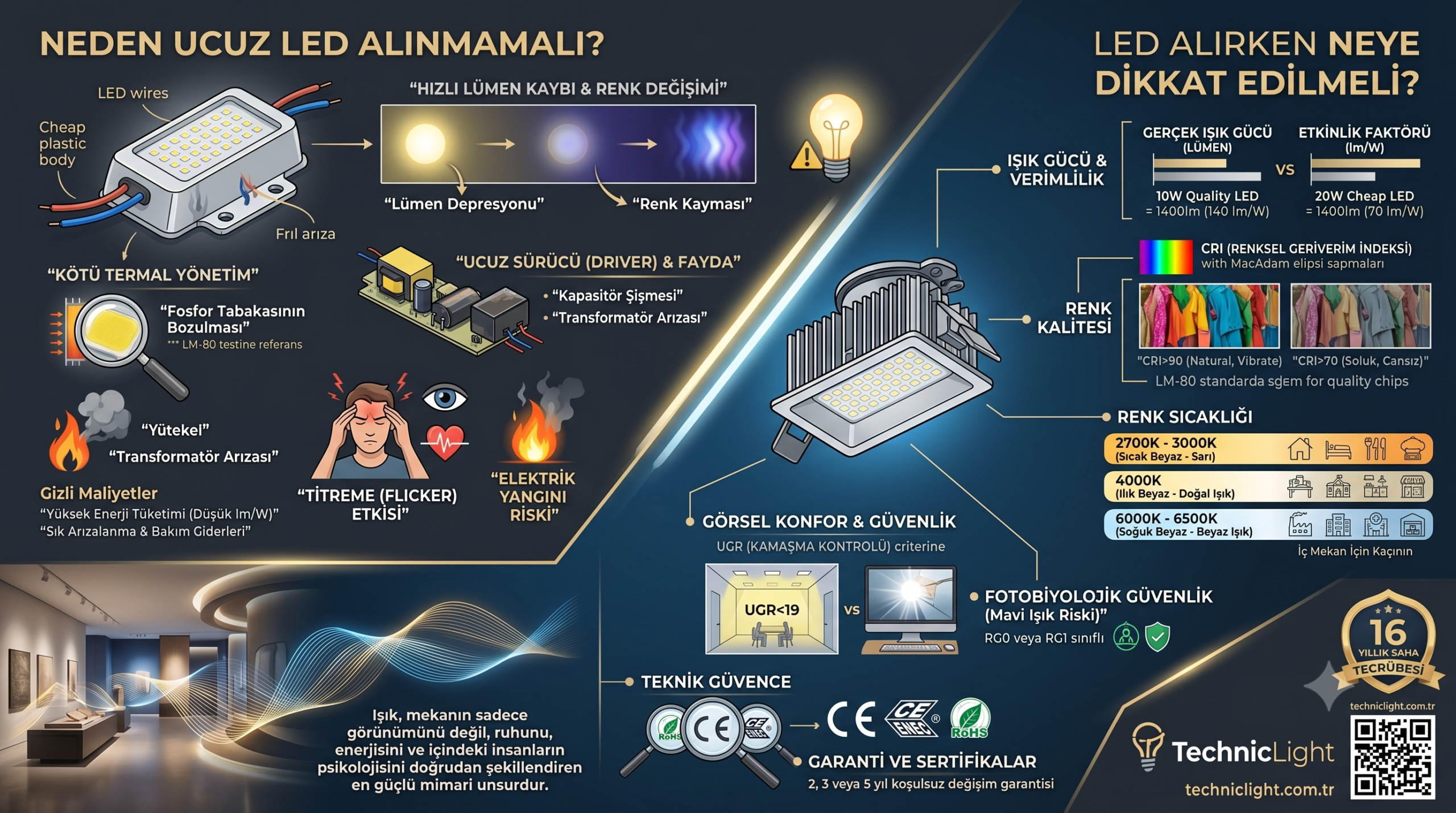
Thanks to their high lumen efficacy, modern LED luminaires reduce energy consumption while delivering high performance. A quality driver and optical design offer a long-term investment advantage.
Common Mistakes in Showroom Lighting
Lighting the entire area evenly
Insufficient accent lighting
Using a low CRI
Wrong Kelvin selection
Professional Planning Process
Space analysis
Define the product category
Calculate lux levels
Luminaire selection
Testing and optimization
More Information
For detailed retail store lighting planning principles:
👉 Check out our How to Light a Retail Store? guide.
More information on architectural lighting design standards:
Conclusion
Professional showroom lighting techniques mean not just lighting the space but creating an experience. Thanks to track spotlight systems, linear LED luminaire solutions, and layered architectural lighting design, showroom projects become strong both aesthetically and commercially. A well-planned lighting strategy enhances the brand's premium perception and elevates the customer experience.