A Professional Display Window Lighting Design Guide That Boosts Sales
In retail, the display window is a store's strongest point of communication with the outside world. A customer's first contact with a store often begins at the window, which is why window lighting design is not merely an aesthetic element but a strategic tool that directly affects sales performance. Thanks to well-planned window lighting solutions, products look more attractive, brand perception is strengthened, and the rate at which passersby walk into the store can increase significantly.
In modern architectural lighting design, window lighting is a way of creating visual storytelling. Through light, products are not merely displayed; they are presented within an atmosphere that lets the customer form an emotional connection. In this guide, we cover window lighting techniques, the correct use of track spotlight systems, linear LED luminaire solutions, beam angles, color temperature choices and professional planning principles in detail.
The Role of Window Lighting in Store Success
Customers evaluate a window within just a few seconds as they pass by a store. Window lighting is critical for catching attention in that short time. The human eye is naturally drawn to differences in brightness, contrast and a sense of movement. For this reason, the light used in a window must not only provide sufficient brightness but also create a visual hierarchy.
The advantages of successful window lighting are:
Attracting attention from a distance
Products perceived as premium
A stronger brand identity
Increased customer curiosity
A higher rate of walk-ins
Poorly planned lighting, on the other hand, can cause products to get lost in the background or make the window look cluttered.
Core Principles of Professional Window Lighting Design
1. Creating a Focal Point
Every window should have a focal point that draws the customer's eye first. This is usually the seasonal product, the campaign product or the brand's strongest design. The lighting design should be planned to highlight this product.
2. Contrast and Depth
Contrast makes a window look dramatic. Creating a difference in light between the background and the product increases visual impact. Strong accent spotlights against a dark background in particular create a premium perception.
3. A Layered Lighting Approach
A successful window design has three layers:
General lighting
Accent lighting
Decorative light
When these layers are used together, a professional and balanced look is achieved.
Professional Window Lighting with Track Spotlight Systems
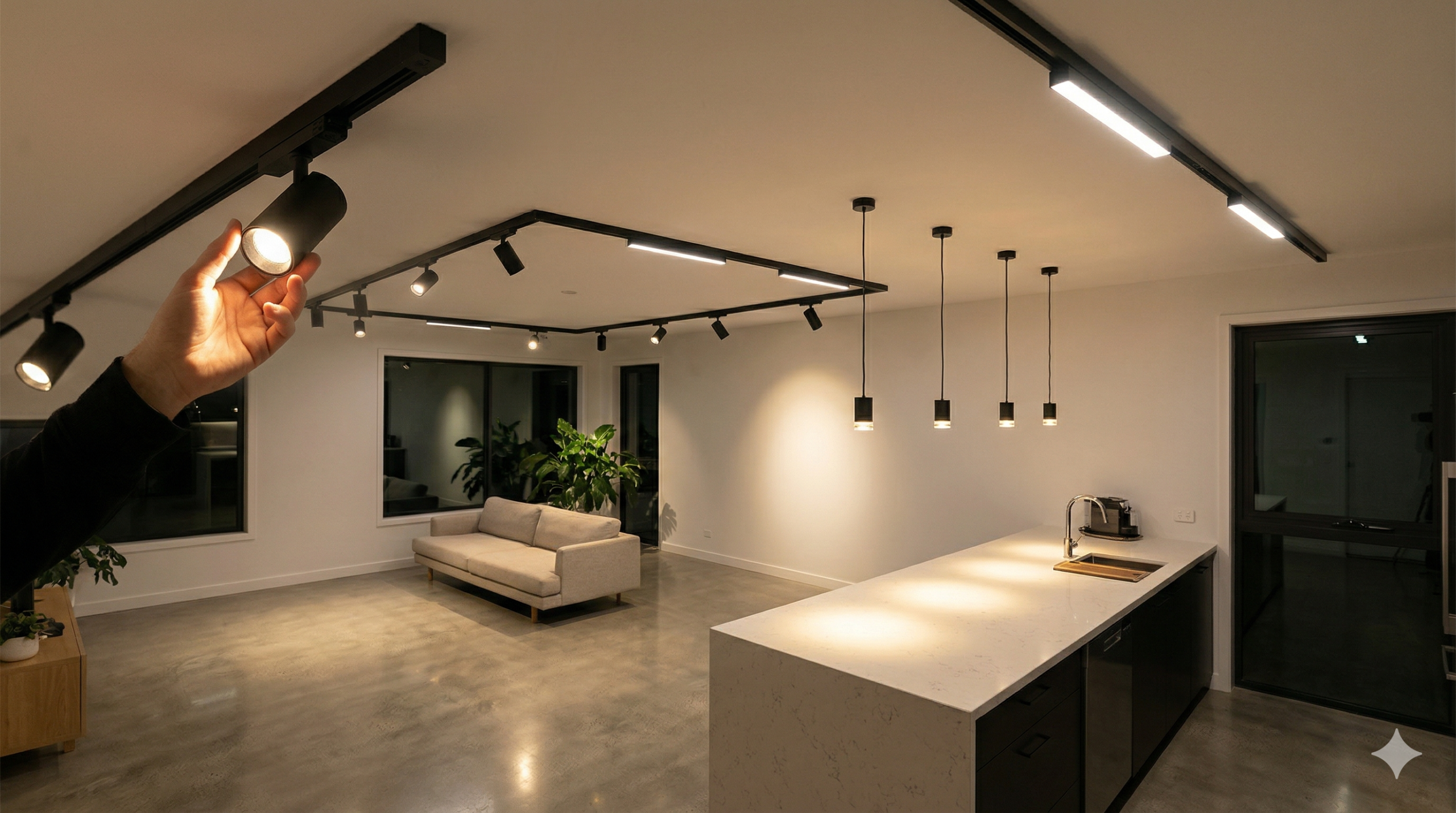
Track spotlight systems are one of the most flexible solutions for window lighting. When the product layout changes, the spotlight angle can be easily adjusted.
Things to watch for when using track spotlights:
Place them at an angle of about 30°–45° to the product
Avoid aiming light directly at eye level
Reduce harsh shadows
Use more than one spotlight for the same product to create balanced emphasis
Narrow-beam spotlights are generally preferred for jewelry, accessories, or premium fashion products.
The Role of Linear LED Luminaires in Window Display Design
Linear LED luminaire systems create a minimalist look in modern window display design. They are used especially to emphasize architectural lines and to create a sense of direction within the display.
Main areas of use:
Under-shelf lighting
Background light lines
Architectural detail accents
Contour lighting around products
Linear lighting details give the window display a modern and professional appearance.
The Importance of Kelvin and CRI Values
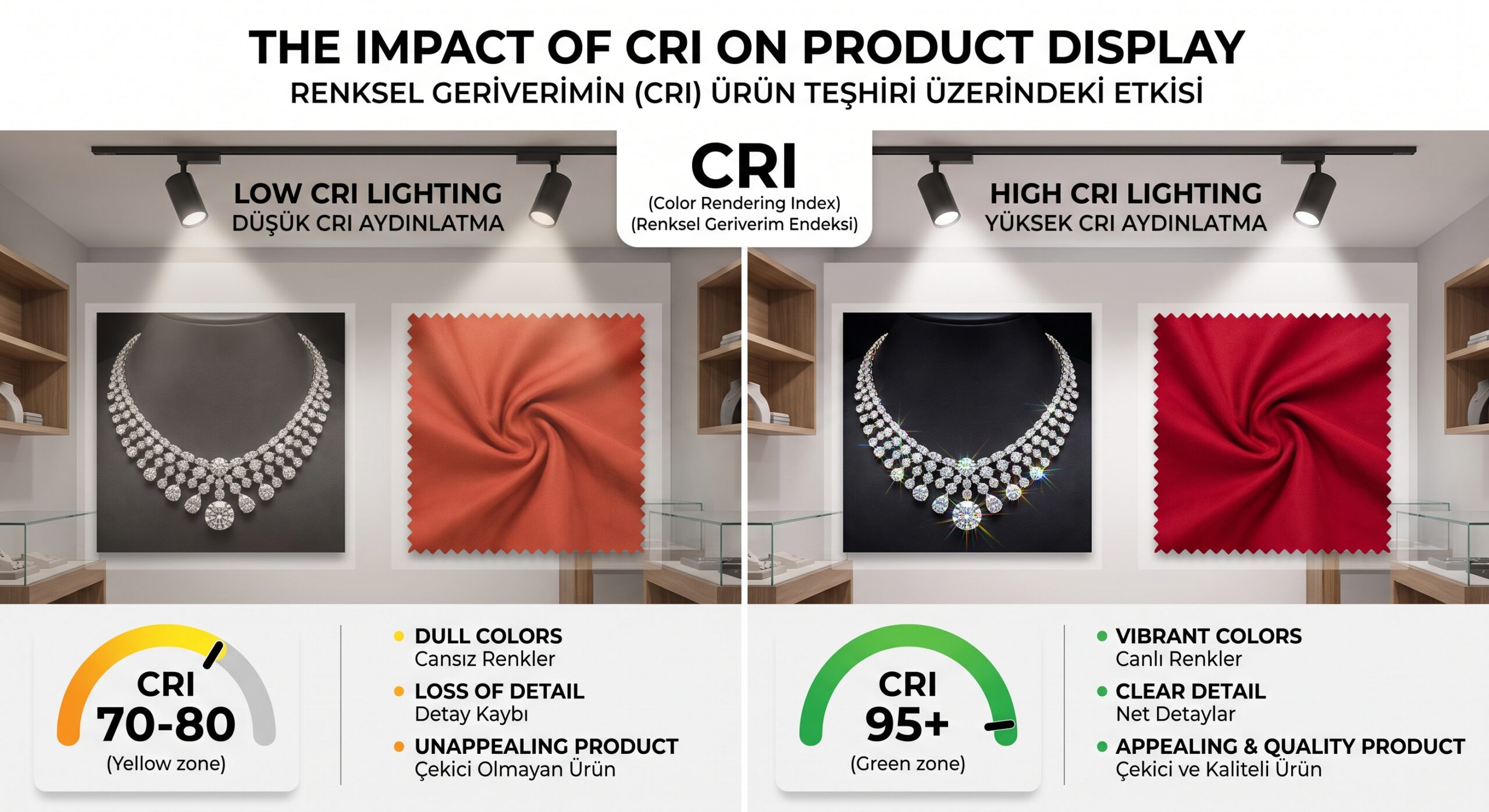
Color accuracy is critical in window display lighting. The wrong light color can alter the true tones of products.
Kelvin choices:
3000K → warm and inviting atmosphere
3500K → balanced boutique-store feel
4000K → natural look
CRI (Color Rendering Index):
CRI 90+ is recommended
High CRI is essential, especially for textile and cosmetic products.
Lux Calculation and Technical Planning
A professional window display lighting plan should be built on lux calculations.
General recommendations:
General window lighting: 500–800 lux
Accent area: 1000 lux and above
Premium displays: high-contrast lighting
Luminaires placed without lux calculations generally produce uneven results.
Customer Psychology and Lighting Design
Light is not only a technical tool but also a psychological factor.
High contrast → eye-catching appearance
Warm tones → inviting feel
Focused spotlight → increases perceived product value
The right lighting plan can make customers study the window display for longer.
Harmony with Showroom and Retail Store Lighting
Window display lighting should be consistent with the in-store lighting concept. The customer experience is strengthened when the transition between the atmosphere outside and the interior is seamless. For detailed retail store lighting principles, see our retail store lighting guide.
Energy Efficiency and LED Technology
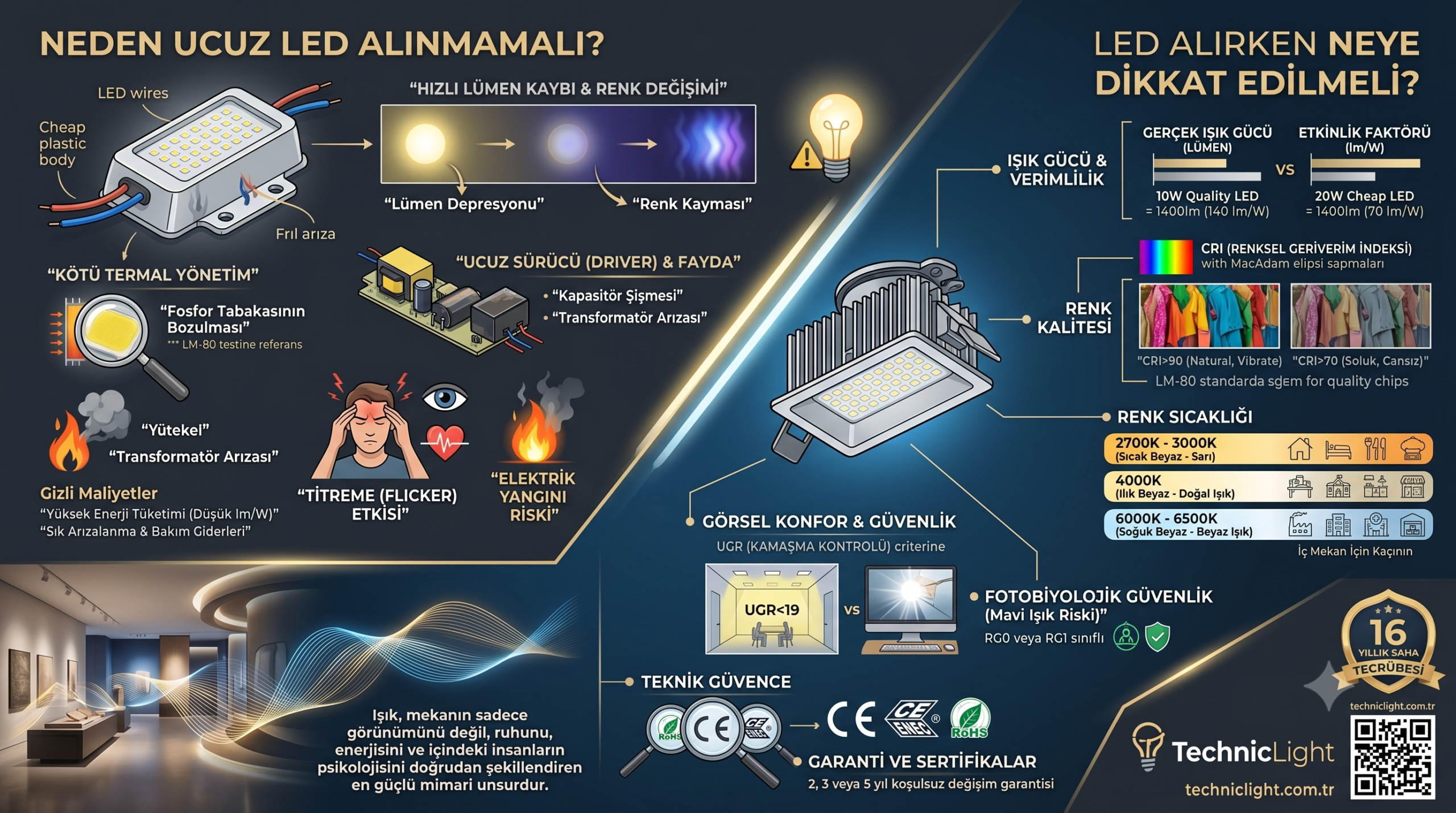
Modern LED luminaires deliver high performance with low energy consumption. Using a quality driver reduces light flicker and makes products look more stable.
Common Mistakes in Window Display Lighting
Lighting the entire window evenly
Choosing the wrong beam angle
Using products with a low CRI
Creating a tiring environment with overly bright light
How to Create a Professional Window Display Lighting Plan
Define the concept
Analyze the product category
Plan the beam angles
Calculate lux levels
Test and optimize
Conclusion
Professional window display lighting design is a strategic tool that strengthens the face a store presents to the outside world. Thanks to track spotlight systems, linear LED luminaire solutions, and proper architectural lighting planning, windows do more than display products; they offer a powerful visual experience that draws customers into the store. A well-planned lighting strategy enhances brand perception, creates a competitive advantage, and contributes directly to sales performance.