How should you choose linear LED luminaires for production line lighting? Learn the right lighting plan with lux levels, beam angle, IP protection and energy efficiency.
How to Plan Production Line Lighting with Linear LED Luminaires
In production facilities, proper lighting is not just about making the space bright; it is also a critical factor for workplace safety, product quality and employee productivity. Linear LED luminaires are one of the ideal solutions for achieving uniform, shadow-free lighting, especially in areas such as assembly lines, quality control stations and machine fronts.
In this article, we look in detail at how production line lighting should be planned and the technical criteria to consider when choosing linear LED luminaires.
Why Use Linear LED Luminaires on Production Lines?
By creating a long, continuous line of light, linear luminaires:
Provide shadow-free lighting
Create a uniform lux distribution on the work surface
Reduce eye strain with flicker-free light
Offer a modern, orderly appearance
Thanks to these features, they are widely preferred, especially in the automotive, white goods, electronics and packaging sectors.
1. Determining the Required Illuminance (Lux)
The required illuminance differs for every production line:
General assembly areas: 300–500 lux
Precision assembly and quality control: 750–1000 lux
Packaging areas: 200–300 lux
The lumen output of the linear LED luminaires you select should be designed to deliver these lux levels.
2. Beam Angle and Light Distribution
The lens and reflector design used in linear luminaires determines how light is distributed across the work surface. Narrow-angle optics perform better in production areas with high ceilings, while wide-angle optics work more efficiently on assembly lines with low ceilings.
3. IP Protection Rating
Production environments may contain dust, moisture and oil vapor. For this reason, the linear LED luminaires you use should have at least:
IP65 (dust-tight and protected against water jets)
protection, which is important for long life and safe use.
4. Color Temperature and CRI
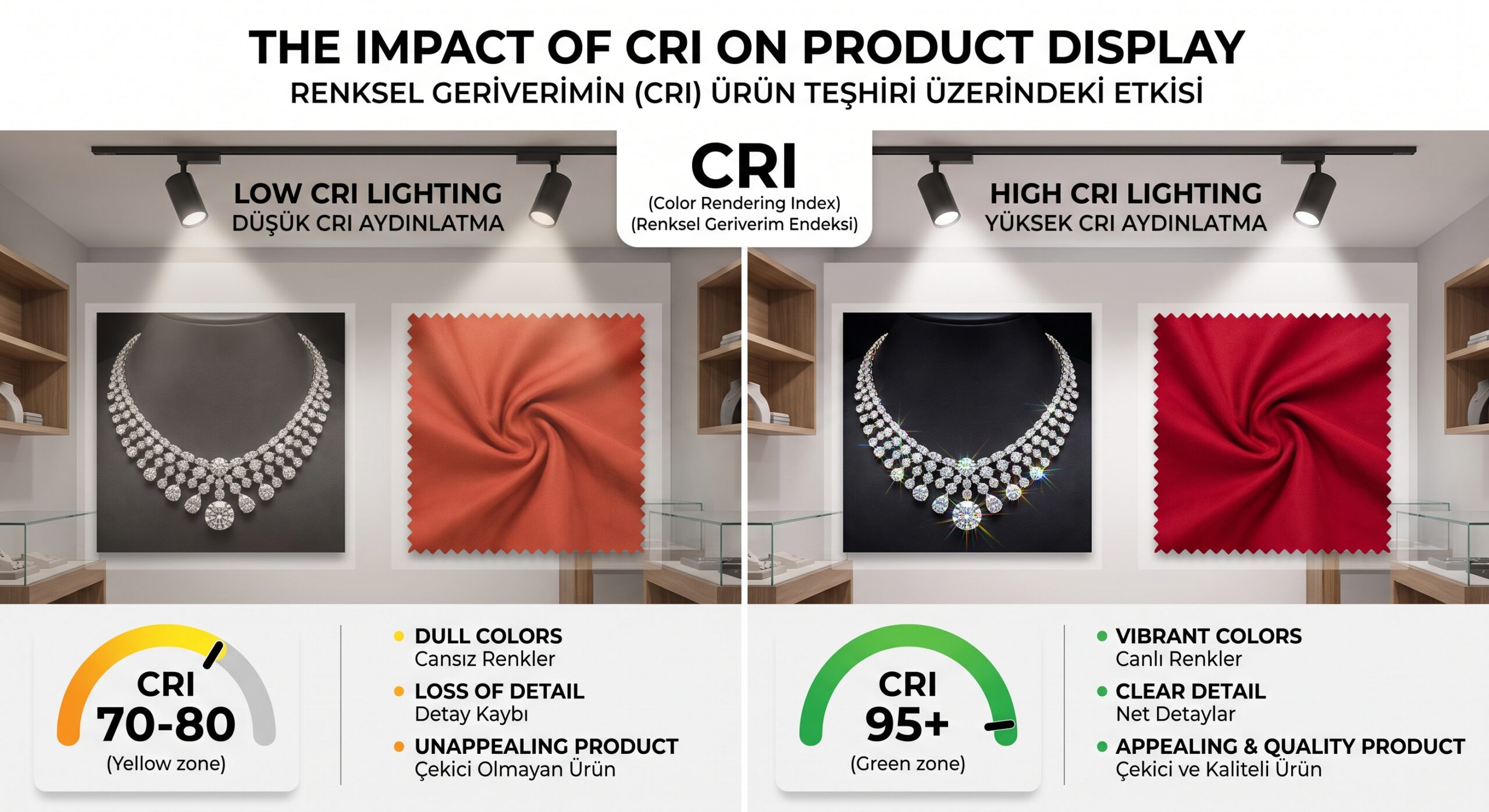
On production lines, natural white light between 4000K and 5000K is generally preferred. A high CRI (≥80 or ≥90) ensures colors are perceived accurately and reduces the error rate.
5. Energy Efficiency
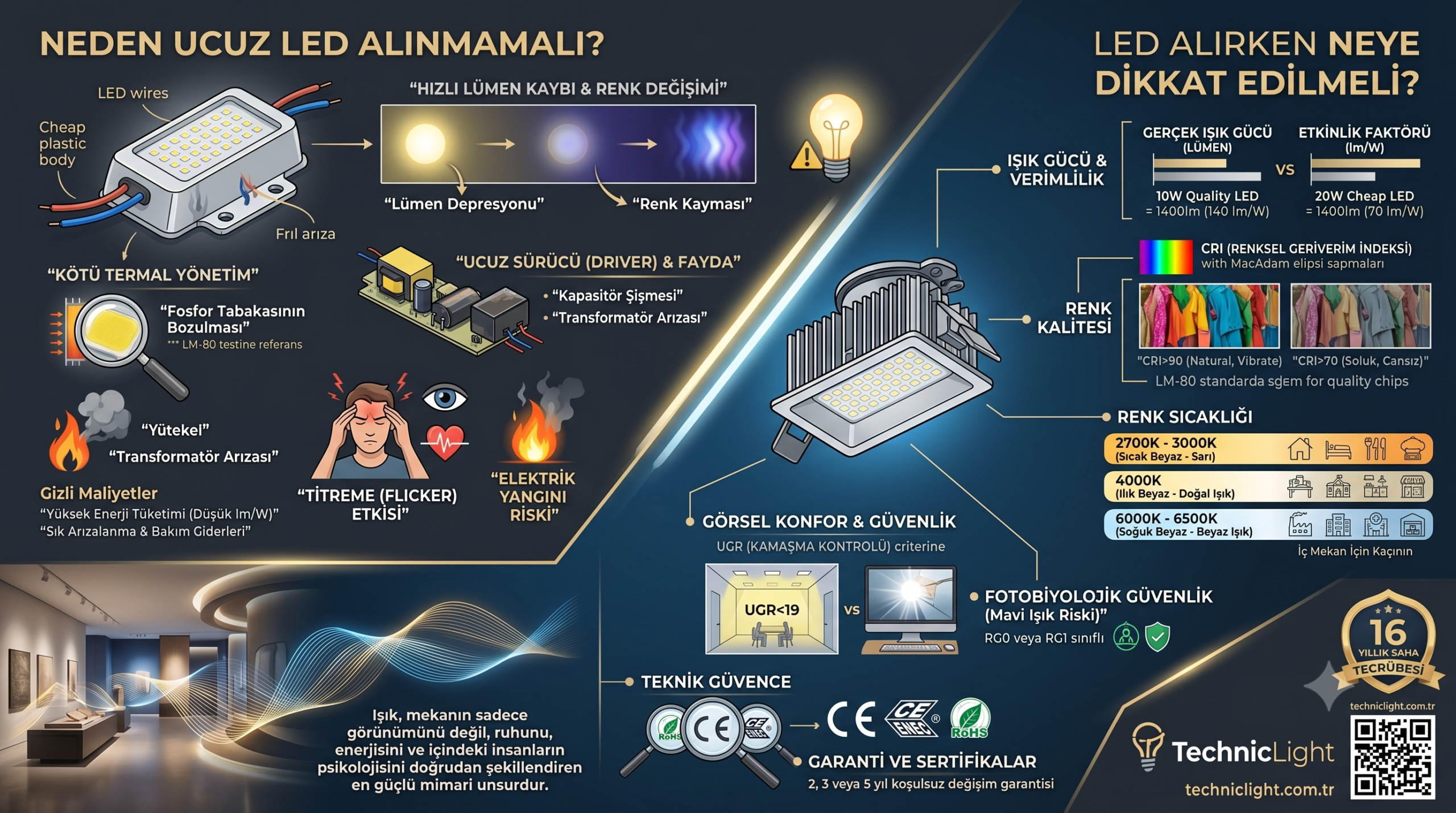
Linear LED luminaires with a high lumen-per-watt rating deliver the same lighting level with lower energy consumption. This lowers operating costs and shortens the payback period of the investment.
6. Driver Quality
In industrial use, driver quality directly affects the life of the luminaire. Choose drivers that are flicker-free, provide stable current and withstand high temperatures.
7. Mounting Type and Continuity
On production lines, linear luminaires are typically installed as:
Suspended in rows
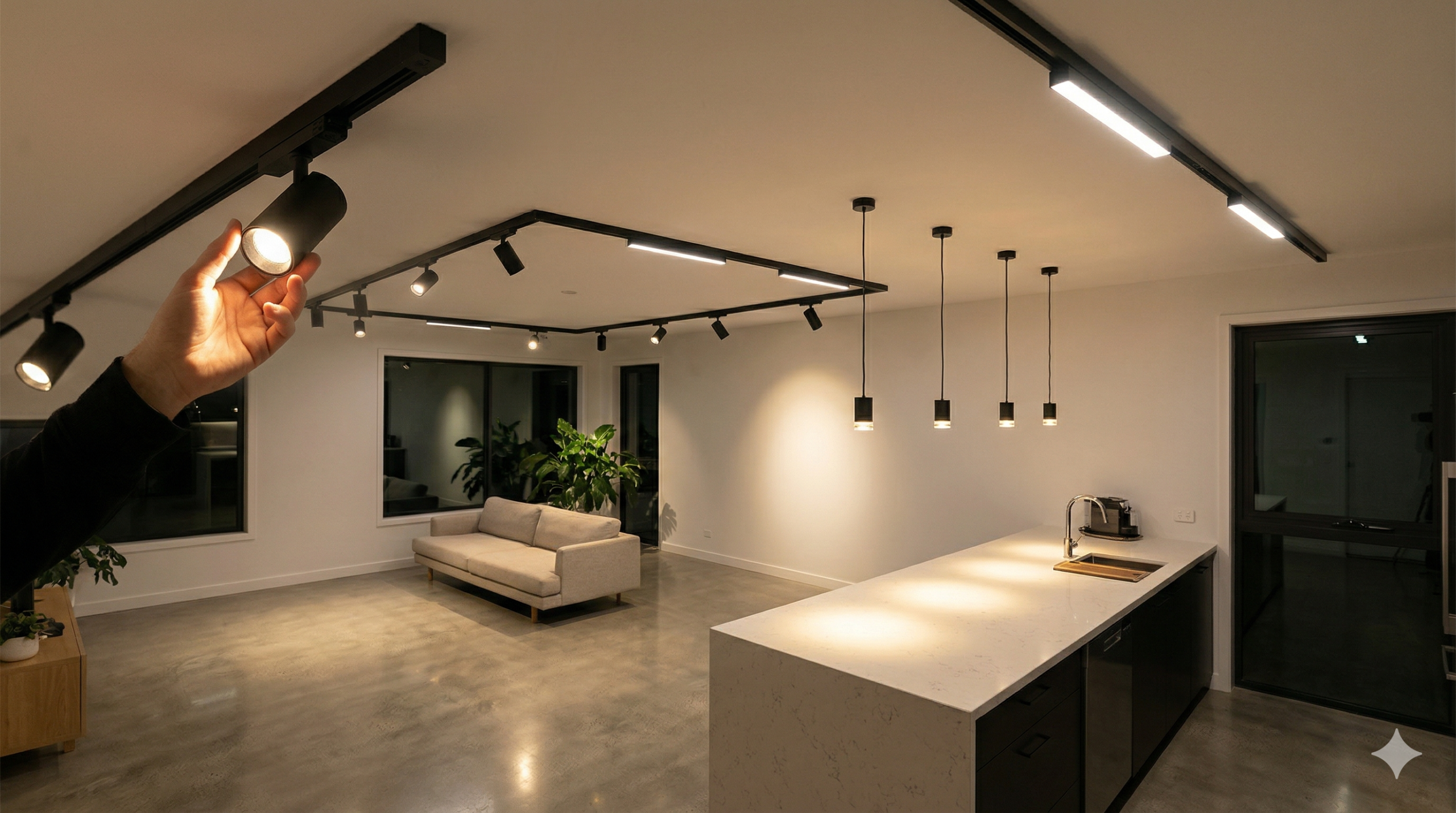
Track system mounting
Recessed or surface-mounted on the ceiling
Arranging them to form a continuous line of light prevents shadows.
Conclusion: Proper Planning, Efficient Production
Linear LED luminaires are one of the best solutions for production line lighting, with the advantages of uniform light distribution, energy savings and long life. However, for maximum efficiency, the lux calculation, beam angle, IP rating and driver quality must be evaluated together.
🔵 The Techniclight Solution
Techniclight linear LED luminaires are designed specifically for production lines, with high-efficiency LED modules, industrial-grade drivers and a range of optical options.