In the modern retail world, store design is not limited to decoration and product placement. Professional retail store lighting solutions are among the most important factors guiding customers' movement through the store, strengthening product perception, and directly influencing purchasing behavior. Thanks to the right architectural lighting design, a store can turn from an ordinary sales area into a powerful experience space.
Today, architects and store owners look for solutions that not only light the space but also create atmosphere. At this point, linear LED luminaire systems, track spotlight systems, and the layered lighting approach form the foundation of modern showroom lighting projects.
What Is Architectural Lighting Design?
Architectural lighting design is the professional planning process that integrates light with the architectural features of the space. The goal is not merely to illuminate; it is to reveal the character of the space, create visual hierarchy, and improve the customer experience.
Successful architectural lighting design:
Accentuates products properly
Increases the perception of depth in the space
Strengthens brand identity
Guides customer flow
Poorly planned lighting, on the other hand, can make the store look cluttered and leave products fading into the background.
How to Create Professional Retail Store Lighting Solutions?
Successful retail store lighting generally consists of three layers.
Ambient Lighting
Ambient lighting provides the basic light level of the space. Linear LED luminaire solutions that deliver homogeneous light distribution are often preferred in modern store designs. Because these systems create continuous lines of light, they are compatible with minimalist architecture.
Accent Lighting
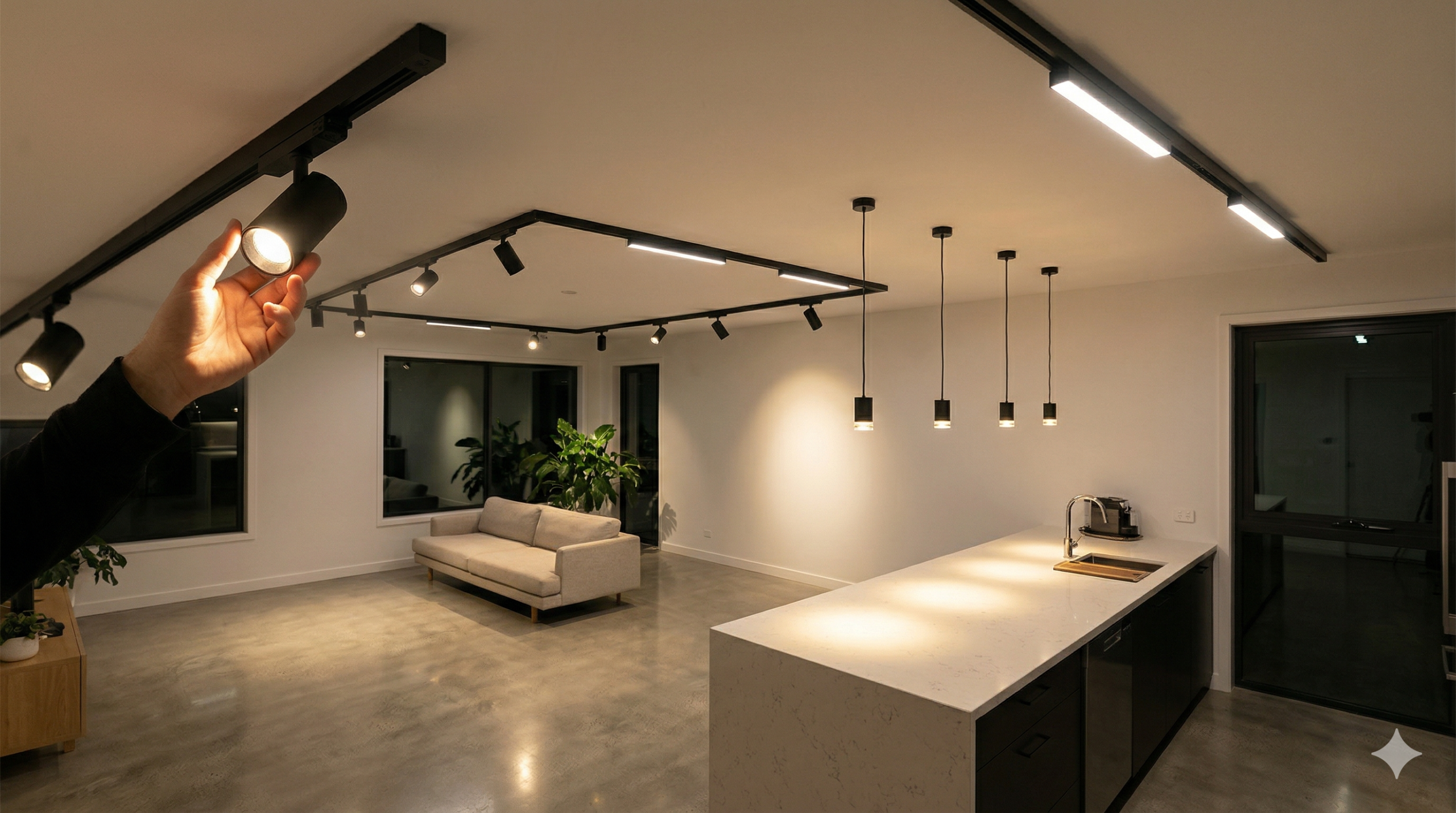
Accent lighting is an important element that directly affects sales performance. Thanks to track spotlight systems, specific products are brought to the fore and the customer's attention is guided.
Advantages of using track spotlights:
Adjustable angle
Flexible placement
Dynamic store design
Decorative Lighting
Aesthetic details are very important in showroom lighting projects. Concealed lighting applications, in-shelf LED solutions, and architectural linear light lines strengthen the space's premium perception.
Key Points in Showroom Lighting Design
In showrooms, the goal is not merely to show products but to create an experience. For this reason, light quality is very important in showroom lighting projects.
Points to consider:
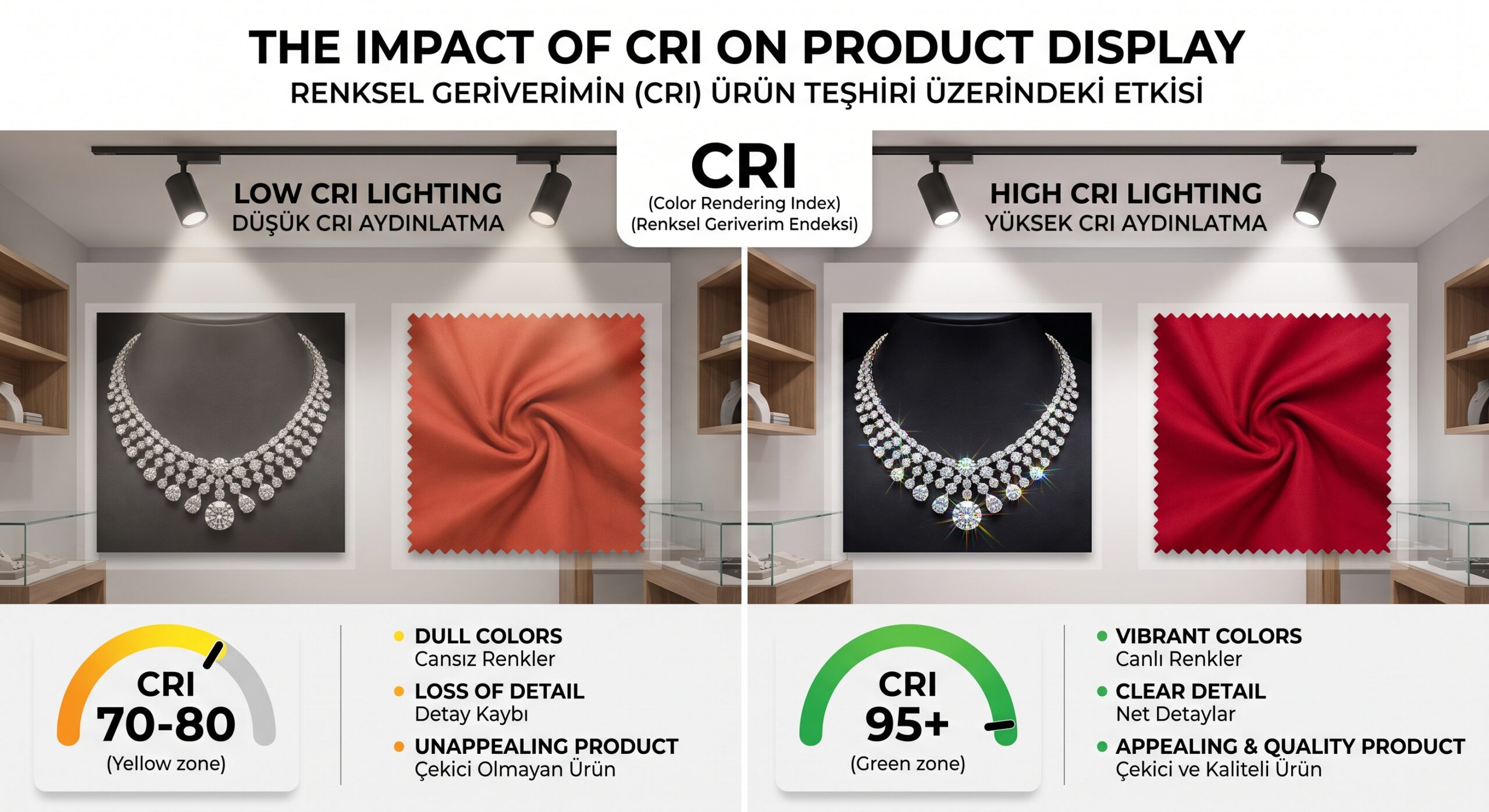
Use of CRI 90 and above light
Correct Kelvin selection (between 3000K–4000K)
No shadows on the product surface
Layered lighting approach
For example, in automotive or furniture showrooms, narrow-beam track spotlight systems can create a dramatic accent effect.
Advantages of Using Linear LED Luminaires
Linear LED luminaire solutions stand out in modern architectural projects because of their aesthetic and technical advantages.
Main advantages:
Homogeneous light distribution
Fits modern design
Energy efficiency
Long lifespan
Linear lighting lines running along the ceiling create a sense of direction inside the store and support the customer experience.
How to Choose the Right Beam Angle for Track Spotlight Systems?
In professional architectural lighting design, the beam angle must be chosen correctly:
15° narrow angle → special product emphasis
24° medium angle → shelf lighting
36° wide angle → general accent
Choosing the wrong angle can create harsh shadows on the product or reduce the desired accent effect.
How to Calculate Retail Store Lighting?
Professional retail store lighting solutions should be planned with lux calculations.
General recommendations:
General area: 300–500 lux
Product accent area: 700–1000 lux
Window display lighting: higher lux values
The right calculation strikes a balance between energy efficiency and light quality.
Energy Efficiency in Architectural Lighting
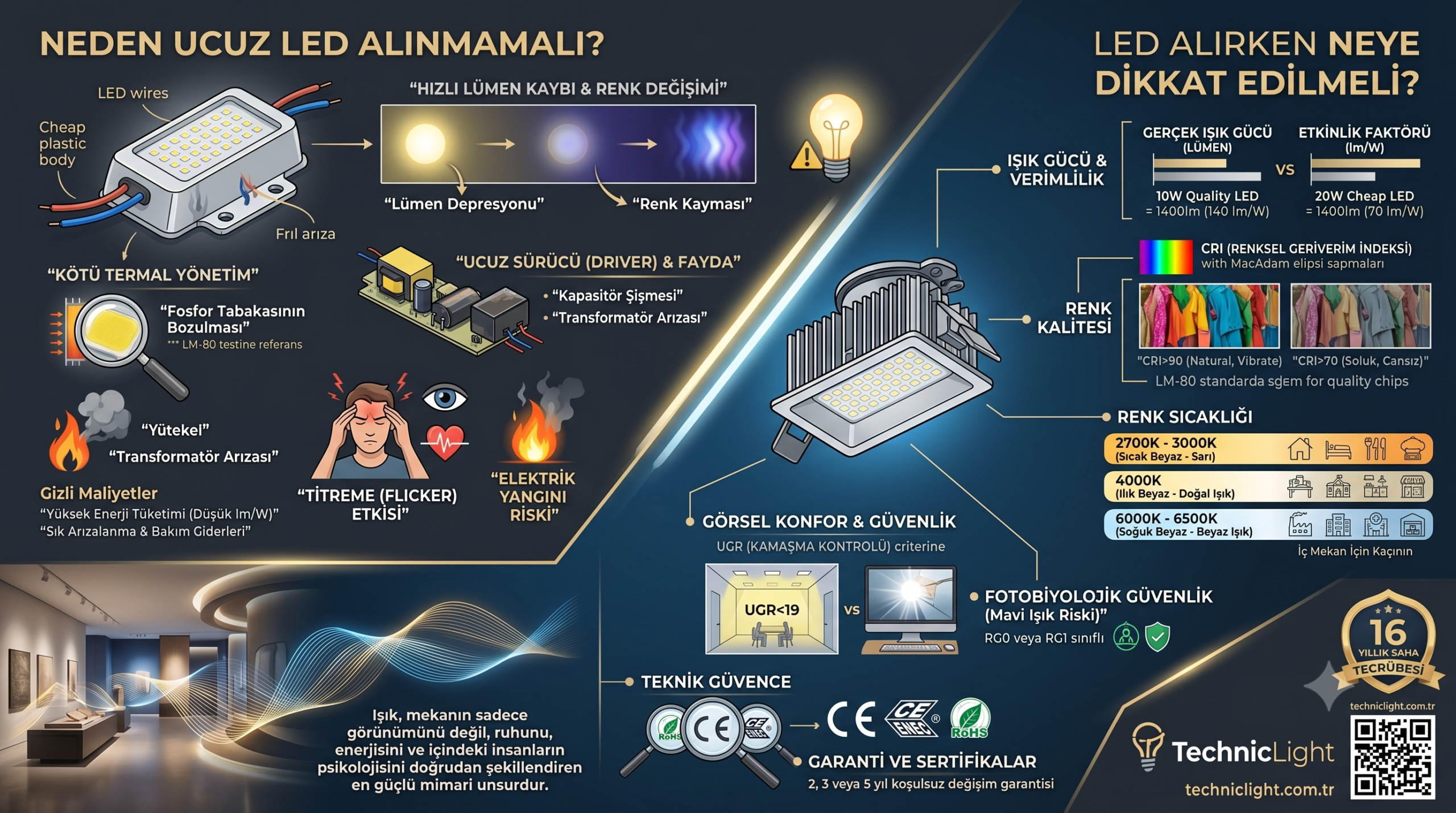
With the advancement of LED technology, energy-saving systems are coming to the fore. Using a quality driver, a high lumen/watt ratio, and the right optical design provides a cost advantage in the long run.
Common Retail Store Lighting Mistakes
Lighting the entire area with equal light
Using a low CRI value
Wrong Kelvin selection
Insufficient accent lighting
Professional architectural lighting design prevents these mistakes.
Conclusion
Properly planned retail store lighting solutions and architectural lighting design can completely change a store's atmosphere. Thanks to linear LED luminaire systems, track spotlight systems, and a layered lighting approach, showroom lighting projects can be elevated both aesthetically and functionally. A professional lighting plan does not merely light the space; it improves the customer experience, strengthens brand perception, and becomes a powerful strategic investment that supports sales performance.
1️⃣ What Degree Should a Track Spotlight Be?
2️⃣ Modern Store Design with Linear LED Luminaires
3️⃣ Showroom Lighting Techniques
This content was prepared by Techniclight.